
AI automation · 13 min read
AI automation for small business: choose the first workflow
Choose the first AI automation for a small business by measuring workflow friction, testing simpler options, controlling risk, and proving one useful result.
Original guidance on category definition, knowledge authority, workflow selection, operational controls, and implementation acceptance.
Choose the first AI automation for a small business by measuring workflow friction, testing simpler options, controlling risk, and proving one useful result.

Compare an internal chatbot with a governed Business Brain by examining sources, permissions, decisions, actions, failure behavior, and audit evidence.

Build a source-authority register that maps company facts to owners, conditions, freshness rules, conflicts, access boundaries, and safe fallbacks.

Choose a first Business Brain workflow by comparing frequency, consequence, evidence readiness, ownership, action scope, failure cases, and reversibility.

Build an AI company knowledge base with authoritative sources, permission-aware retrieval, freshness rules, citations, evaluation, and safe action boundaries.

Compare an internal knowledge base, AI search, and a Business Brain by their jobs, controls, and the point where added complexity pays off.
Connect ChatGPT to company knowledge using built-in search, apps, MCP, or custom RAG, with controls for permissions, citations, prompt injection, and writes.

Keep prospect context from LinkedIn outreach to sales handoff with a copyable record for sources, verified facts, open questions, reply ownership and next steps.
Build a corporate knowledge base with clear ownership, authority, permissions, review triggers, useful search, and a controlled path to AI answers.
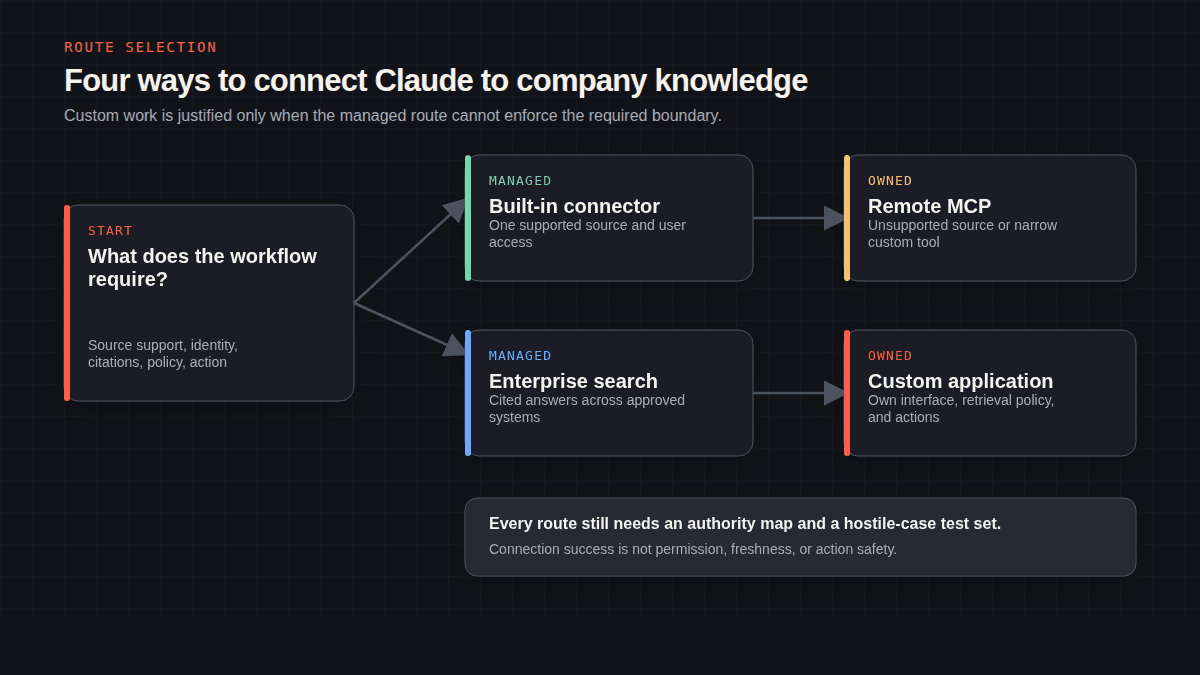
Choose the right way to connect Claude to company knowledge, preserve source permissions, test citations, and decide when custom MCP is justified.
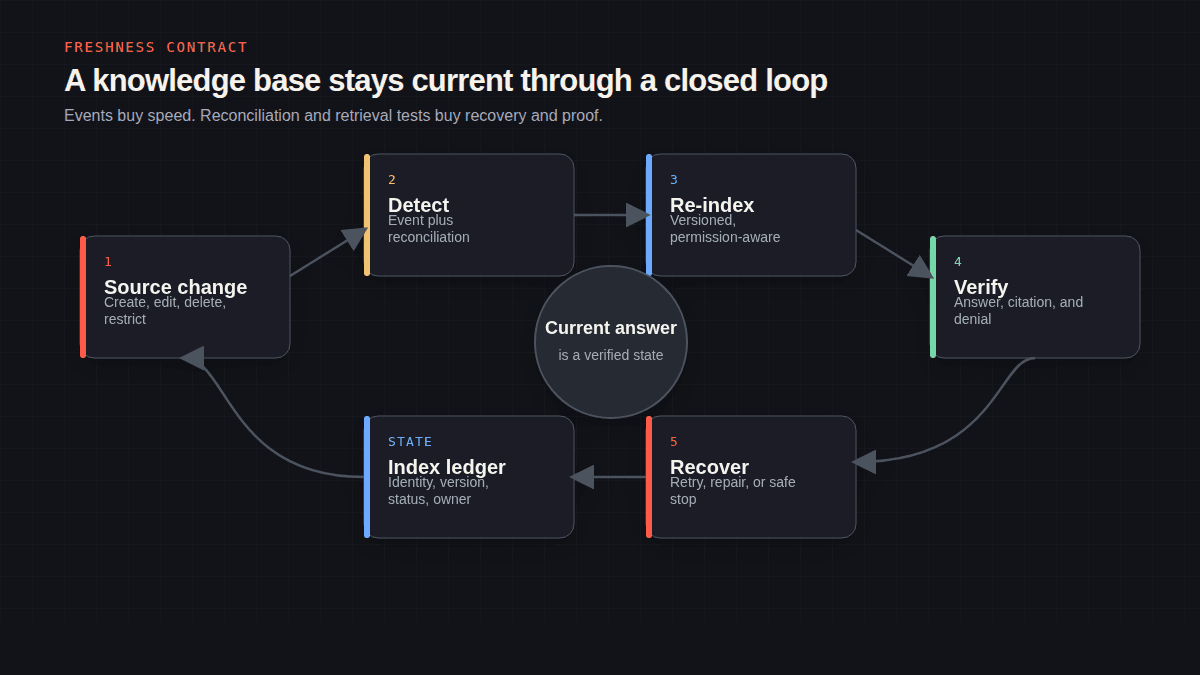
Design a knowledge base freshness loop for additions, edits, deletions, permission changes, failed syncs, source conflicts, and verified recovery.
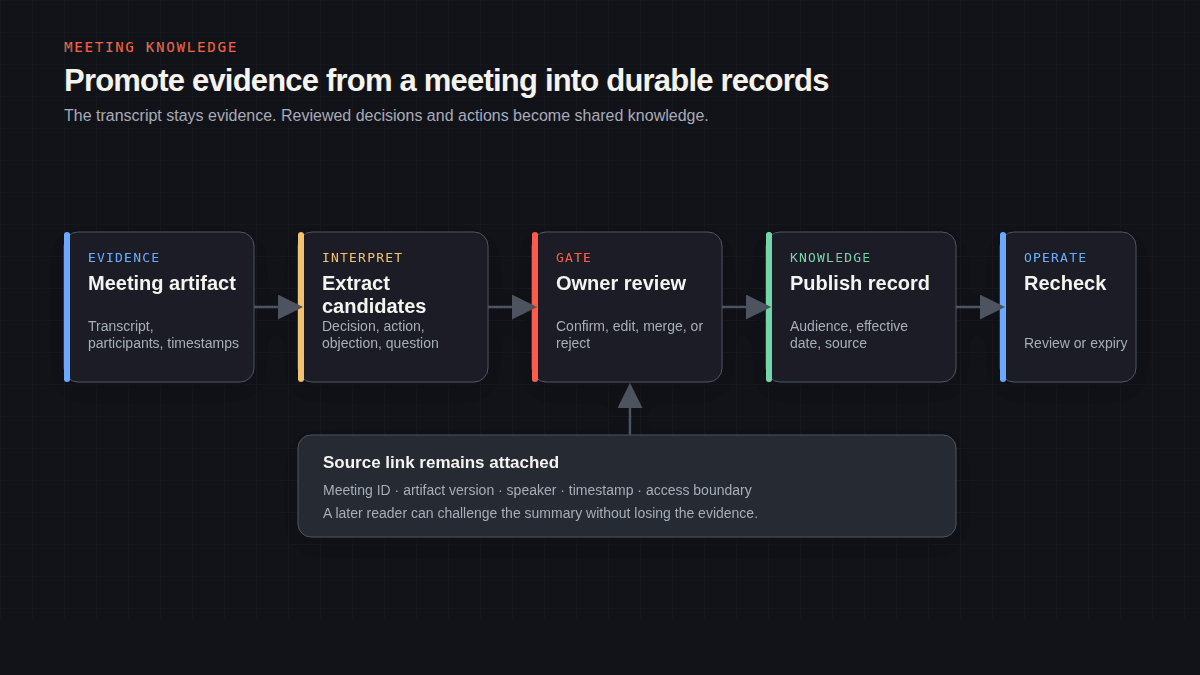
Build a meeting knowledge base that turns transcripts into searchable, source-linked decisions, actions, objections, and reviewed team knowledge.
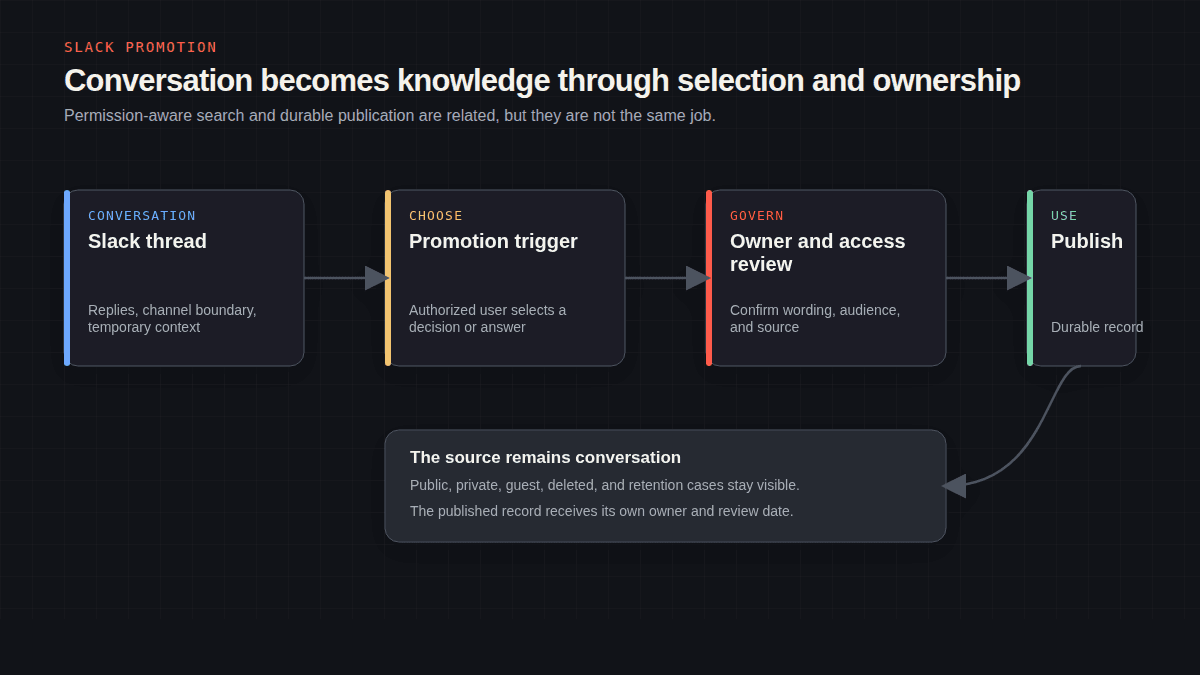
Turn selected Slack conversations into durable, source-linked knowledge while preserving channel access, retention, ownership, review, and expiry.
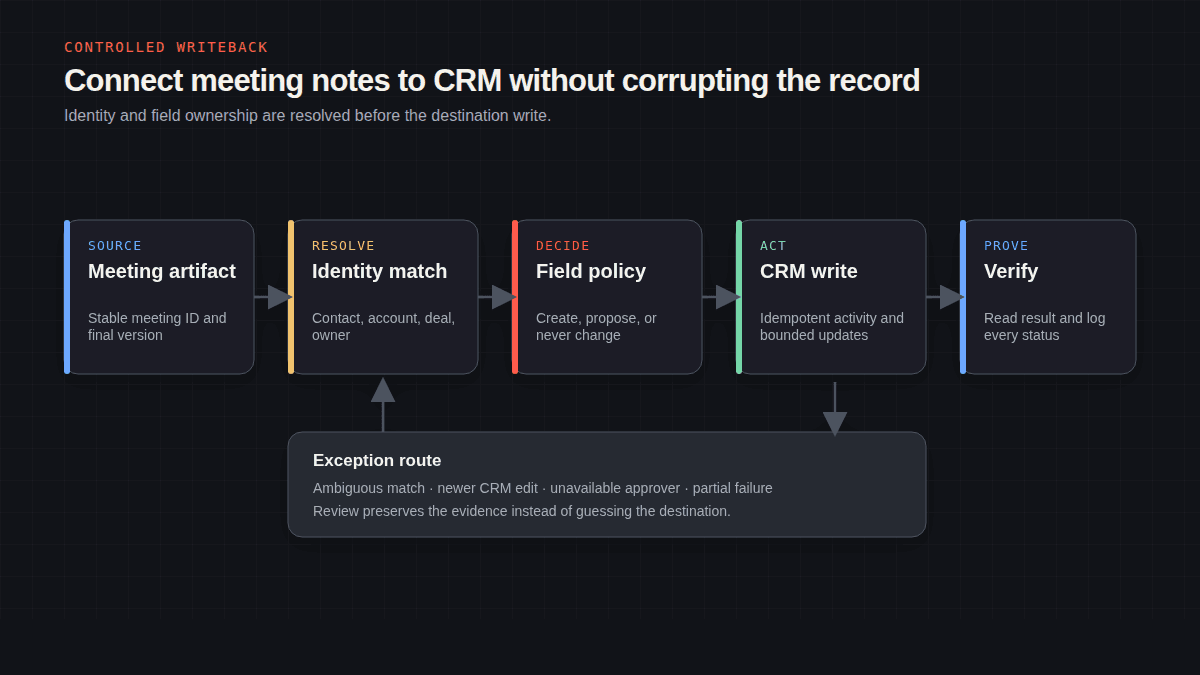
Move meeting notes to CRM records with identity matching, bounded updates, approval, duplicate prevention, and destination verification.
Use a knowledge-based mainframe renewal process to recover business logic, map dependencies, preserve expert judgment, and test modernization safely.
Create an industry-specific knowledge base for AI agents with bounded workflows, authoritative sources, domain terms, permissions, tests, and safe actions.
Run business assurance testing on AI knowledge systems with process-level cases for evidence, access, freshness, conflict, action, failure, and audit recovery.
Design a meeting knowledge base architecture that preserves source evidence, separates decisions from discussion, controls access, and survives change.

Compare business assurance testing with user acceptance testing, including scope, evidence, owners, failure cases, and the conditions needed before release.
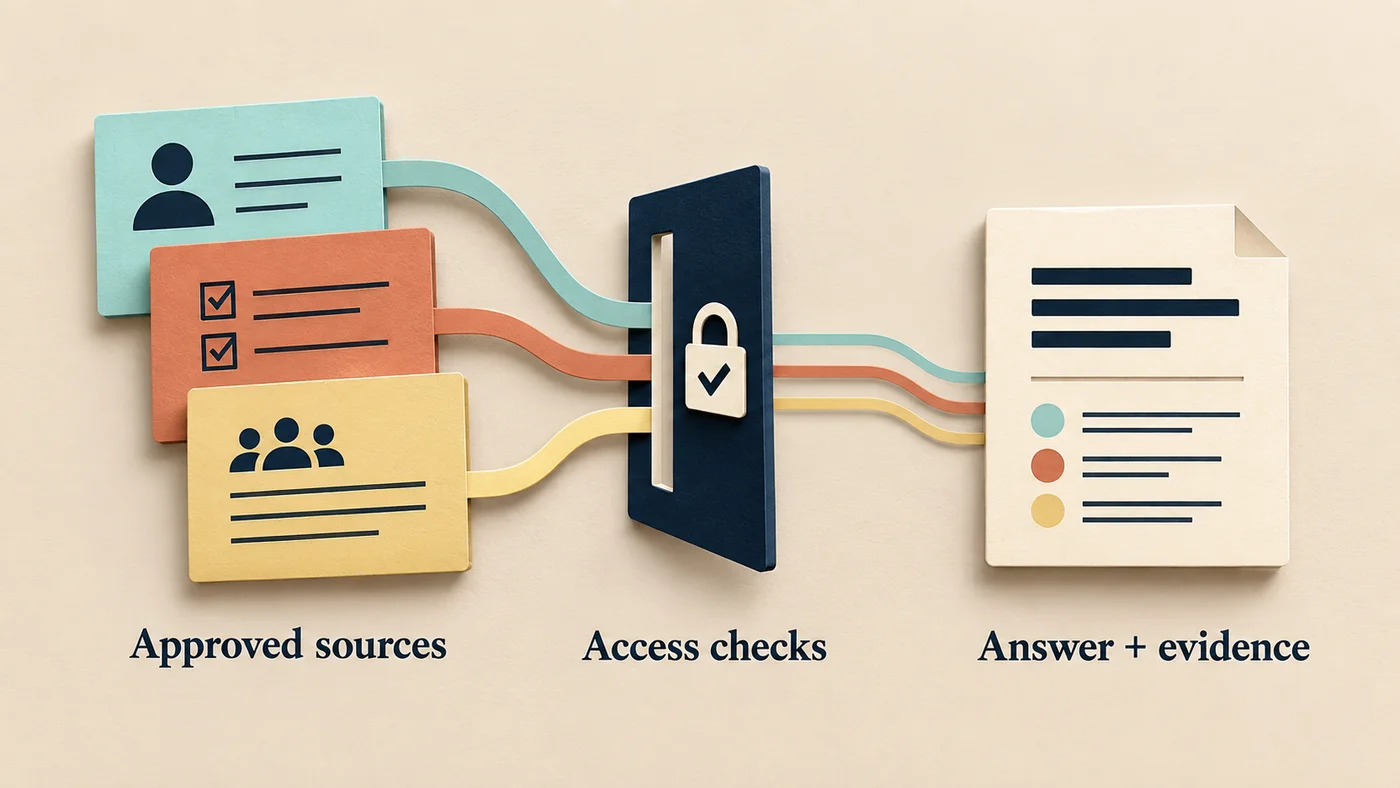
Build a Business Brain around one real workflow. Choose sources, preserve permissions, test answers and maintain the system before expanding it.

See where a Business Brain can reduce repeated work, improve access to company knowledge, and help a small team. Includes a practical benefits test.
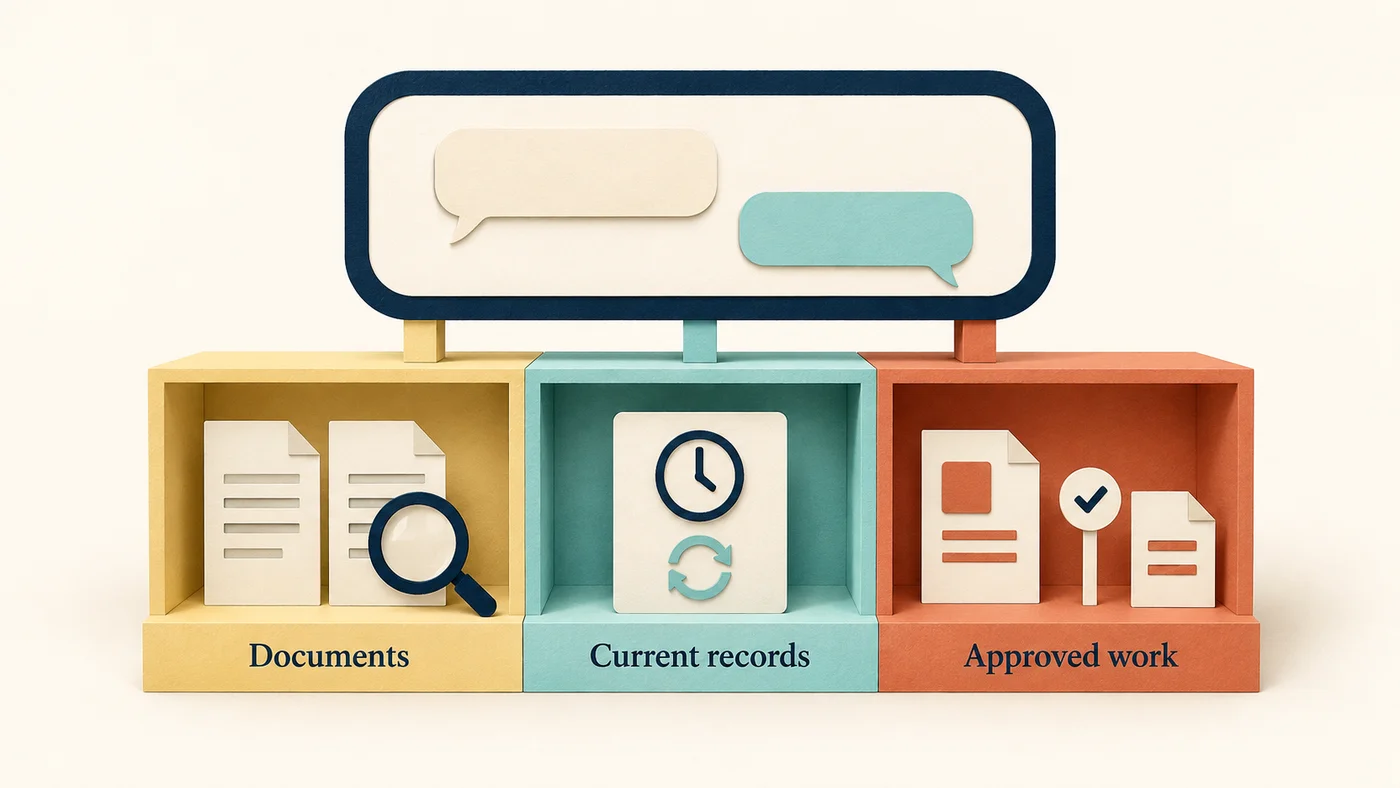
Compare a Business Brain with a company chatbot by the work it must do, the sources it uses and the controls it needs. Includes a supplier-scope example.

Choose Business Brain tools around the work you need done. Compare assistants, knowledge stores, connectors and automation before buying more software.

Compare Business Brain setup fees, subscriptions, usage and maintenance. Use a worked first-year budget and a checklist to get quotes you can actually compare.

Compare Business Brain timeline claims, separate setup hours from calendar time, and use practical readiness checks to plan a rollout your team can trust.

Choose native Slack, a managed assistant or a custom workflow. Connect Drive and CRM with source permissions, private answers, citations and approval checks.
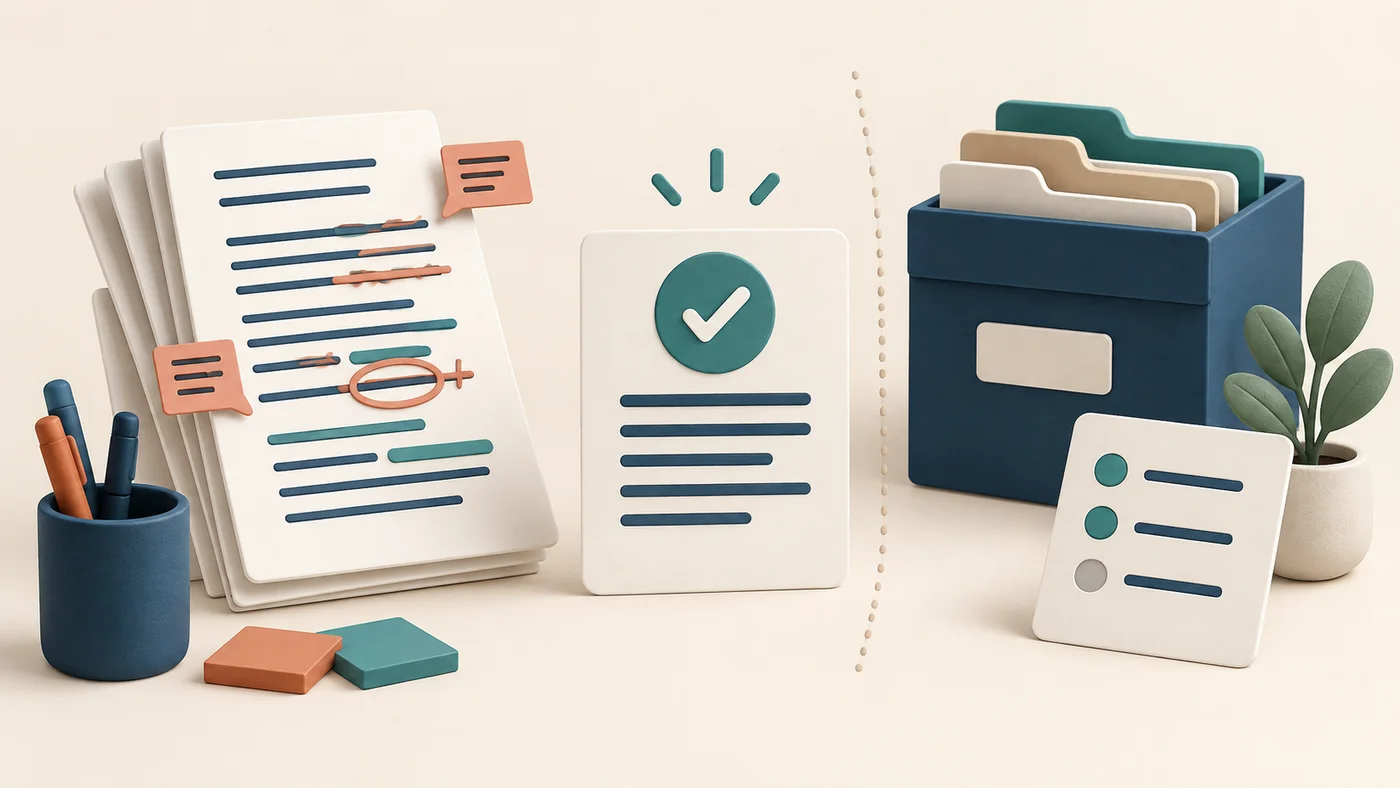
Prepare company documents for reliable AI answers. Resolve conflicting versions, check PDFs and tables, preserve permissions, and test updates before rollout.
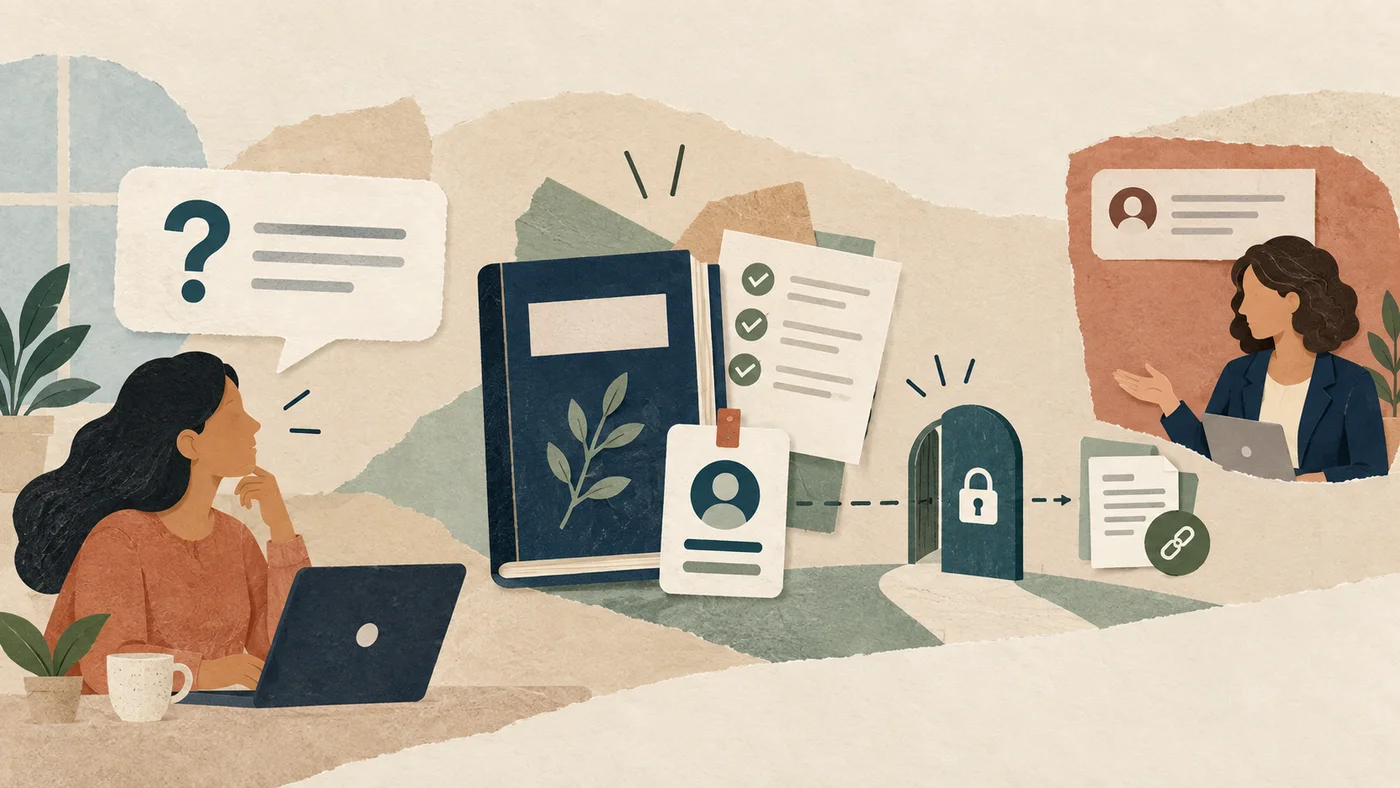
Use an AI knowledge base for employee onboarding without turning HR policy into guesswork. Map roles, protect sources, test answers, and escalate exceptions.
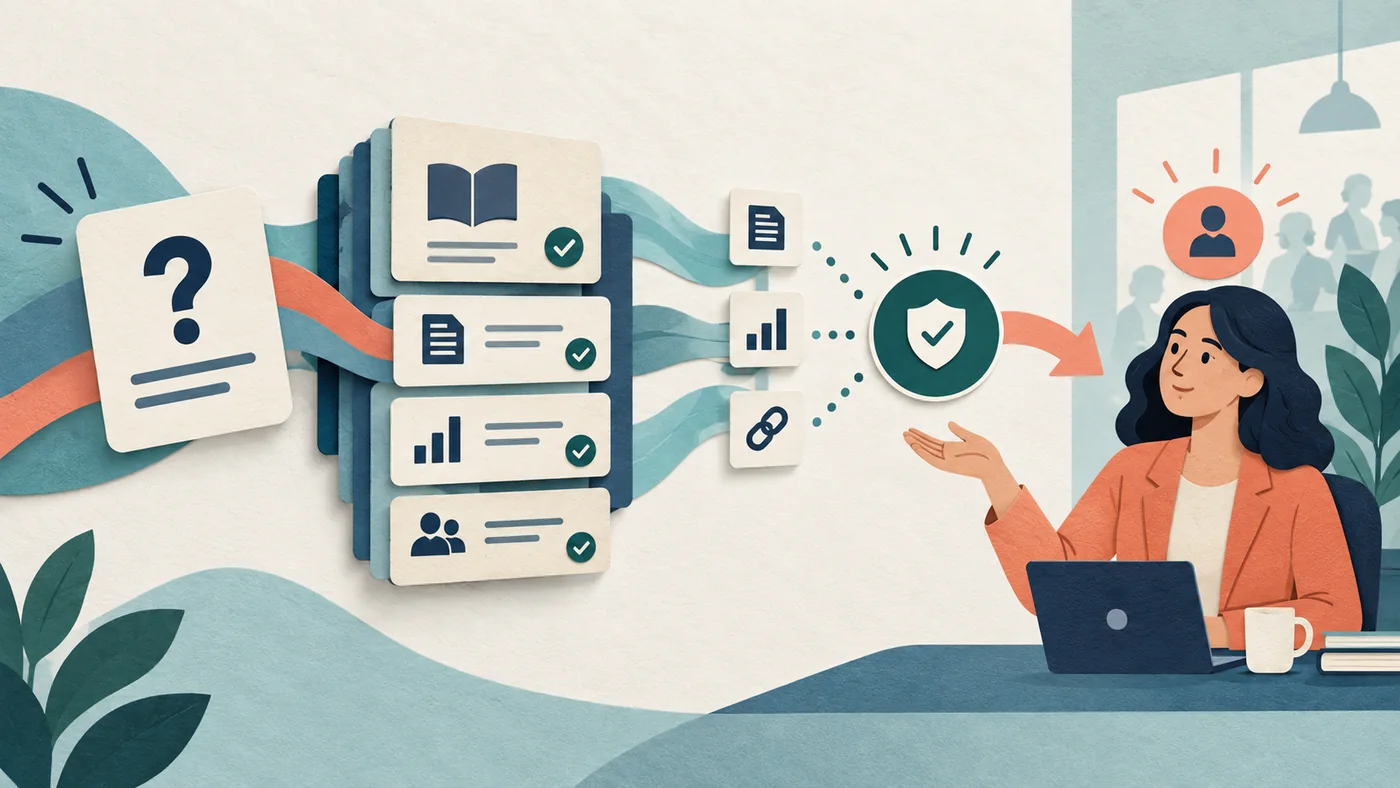
Route company questions to the right internal expert with source evidence, current ownership, permission checks, and a clear human escalation path.
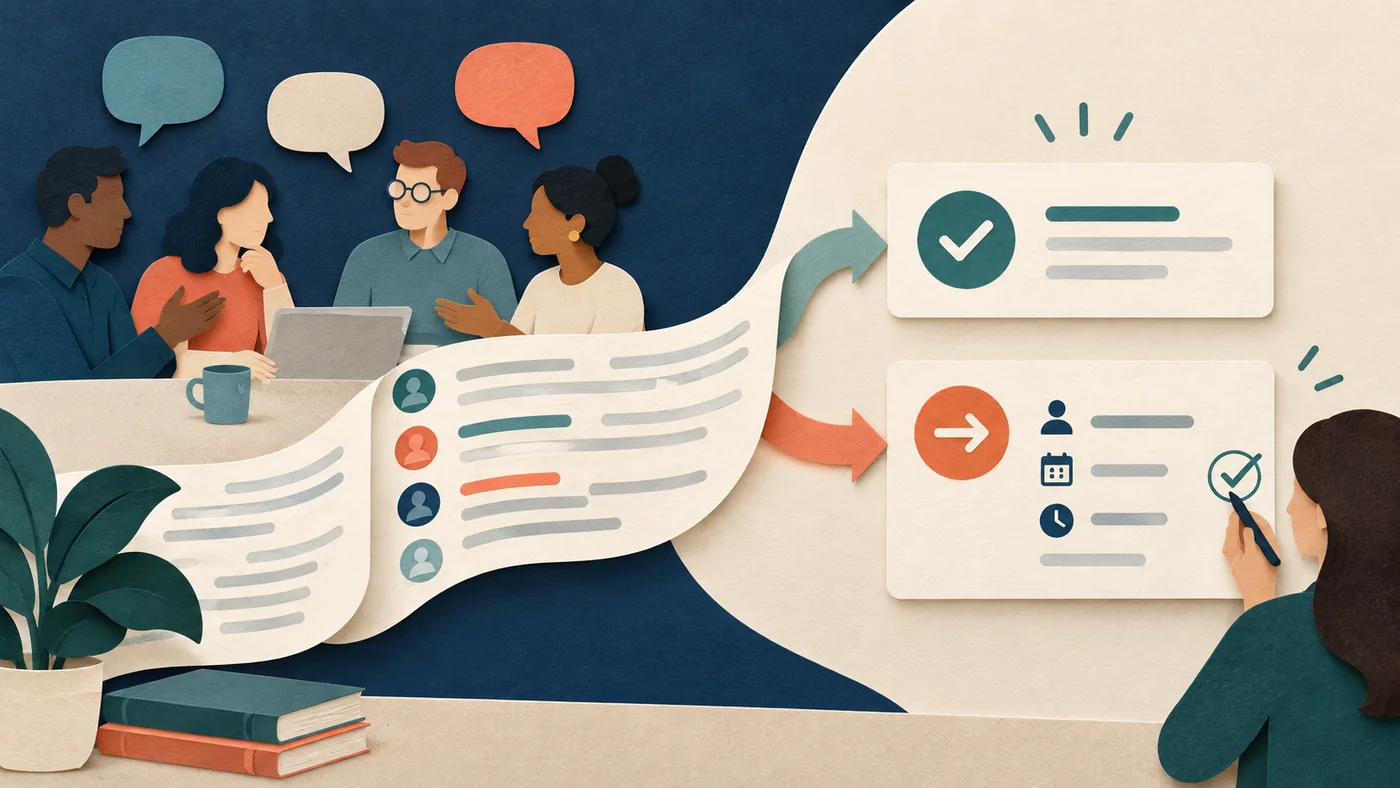
Turn a meeting transcript into a reviewable decision record with owners, dates, evidence timestamps, unresolved questions, and safe handoff into your workflow.

Create an AI daily business briefing that focuses on material changes, blocked work, commitments, and decisions with source links and accountable follow-up.
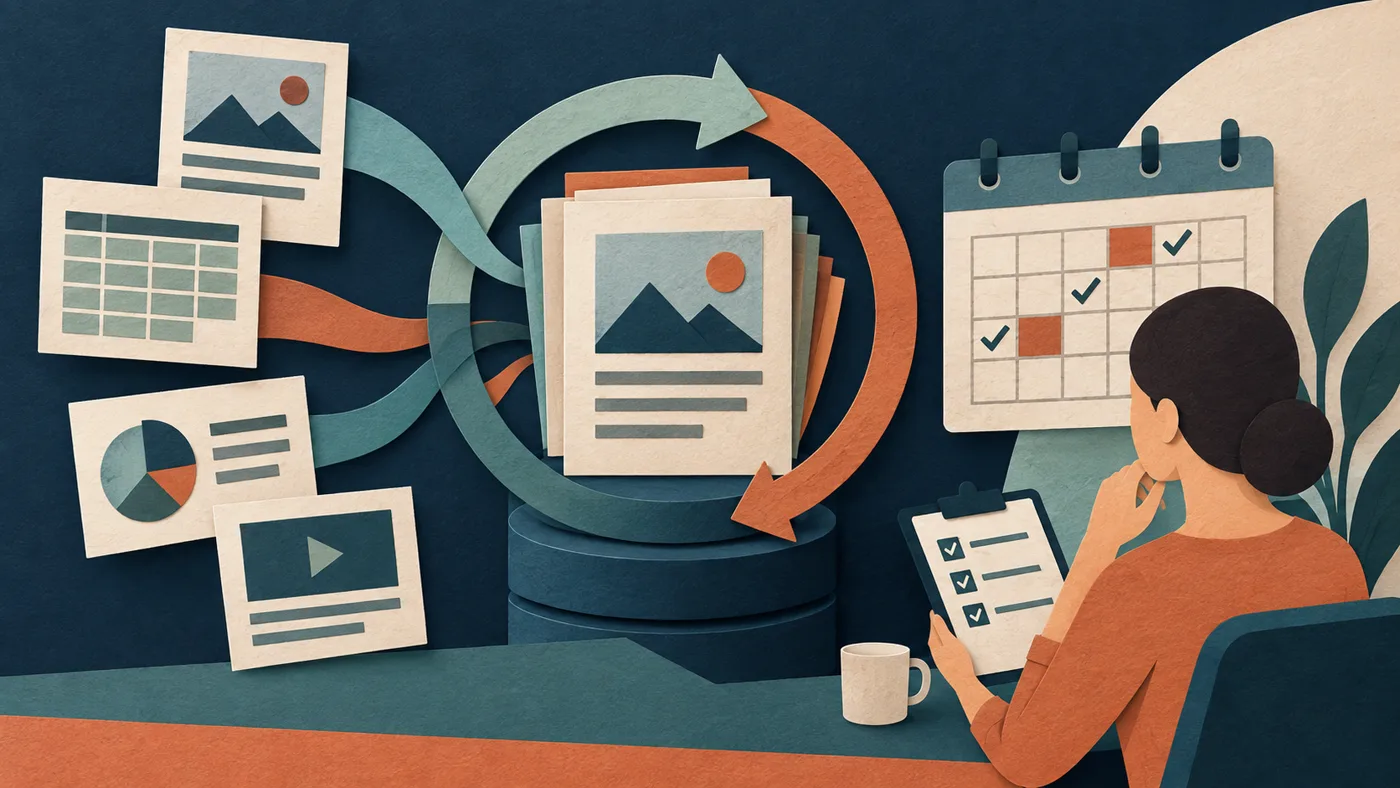
Keep an AI knowledge base current with source ownership, update and deletion handling, review dates, conflict rules, and tests that prove old answers stop appearing.
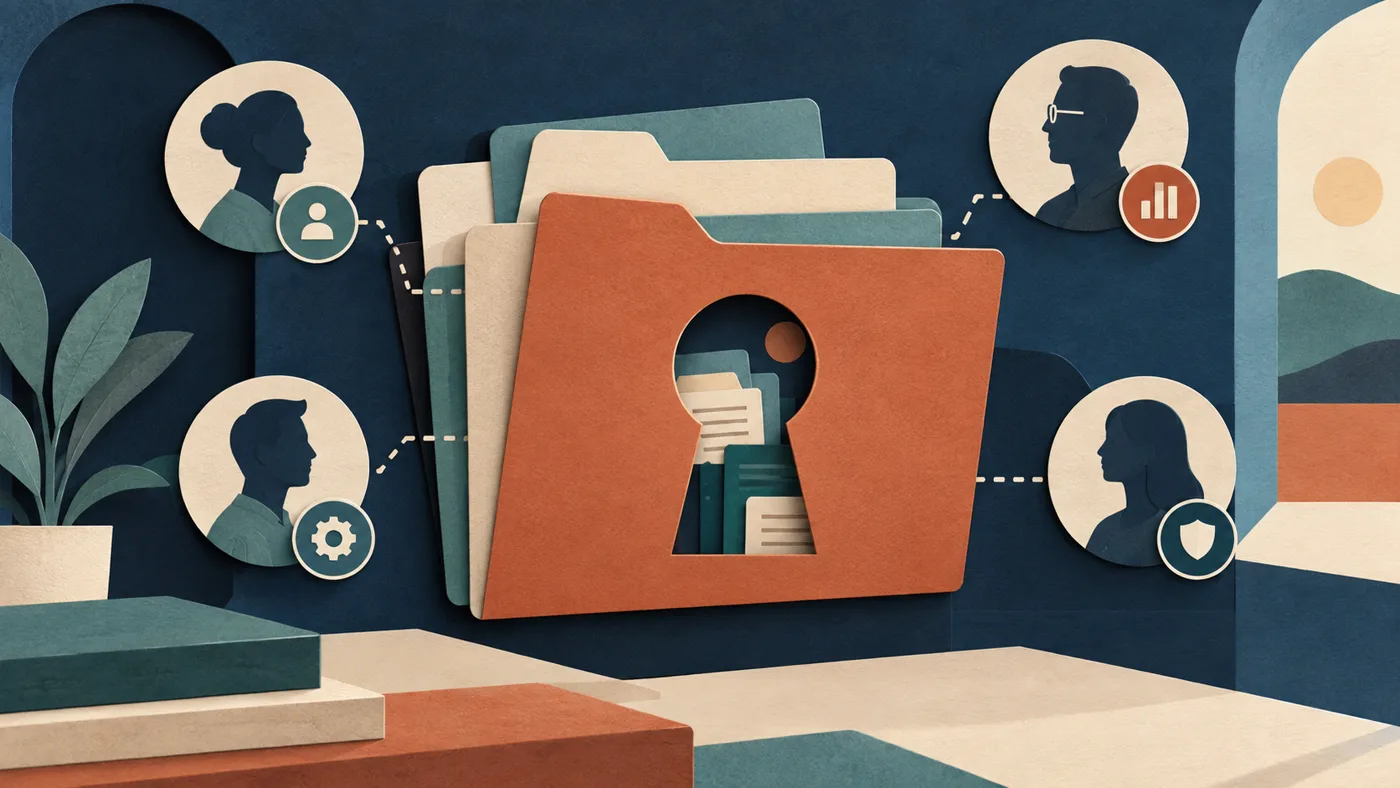
Manage AI knowledge-base permissions with identity resolution, source-level rules, derived-record checks, revocation tests, and safe failure behavior.
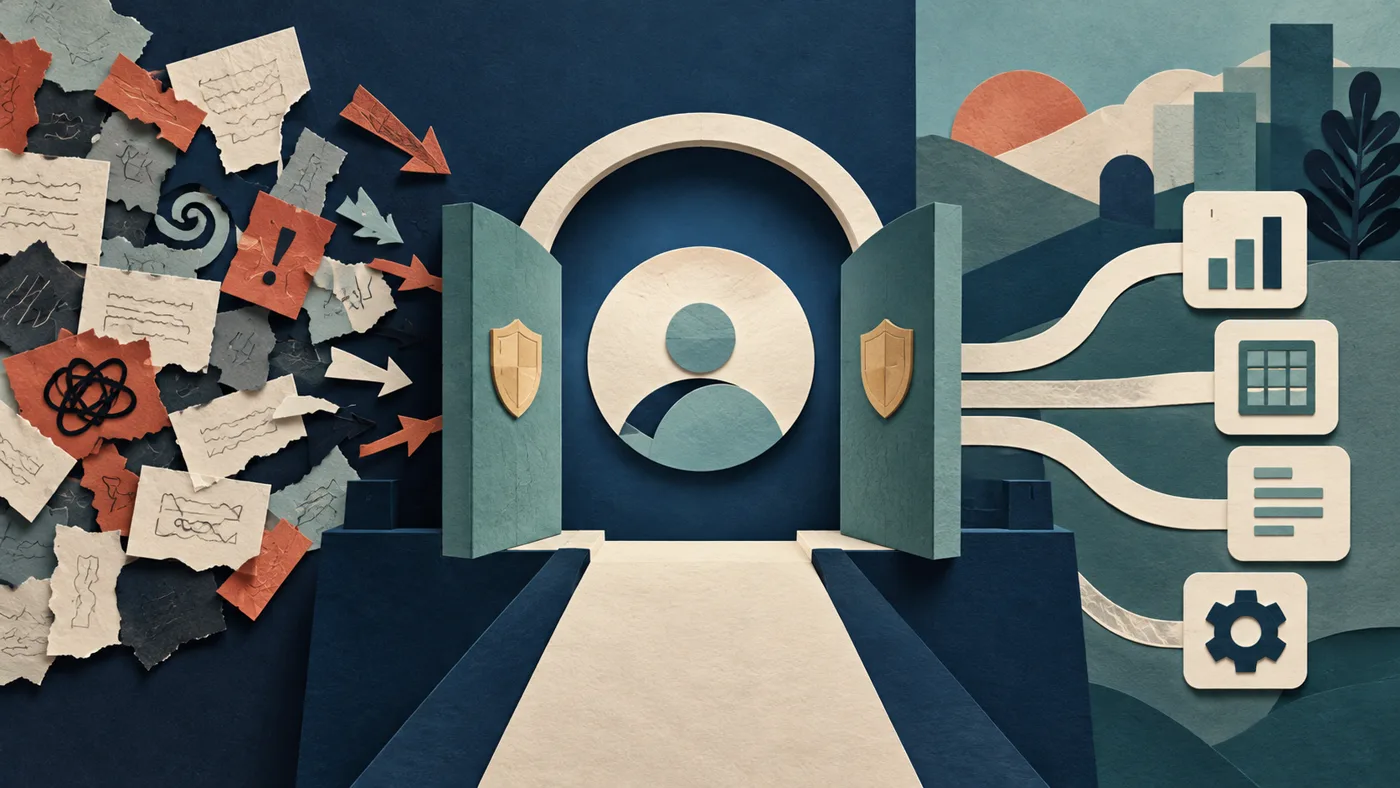
Protect a business AI assistant by isolating untrusted content, restricting tools, checking authorization, and testing failure paths.
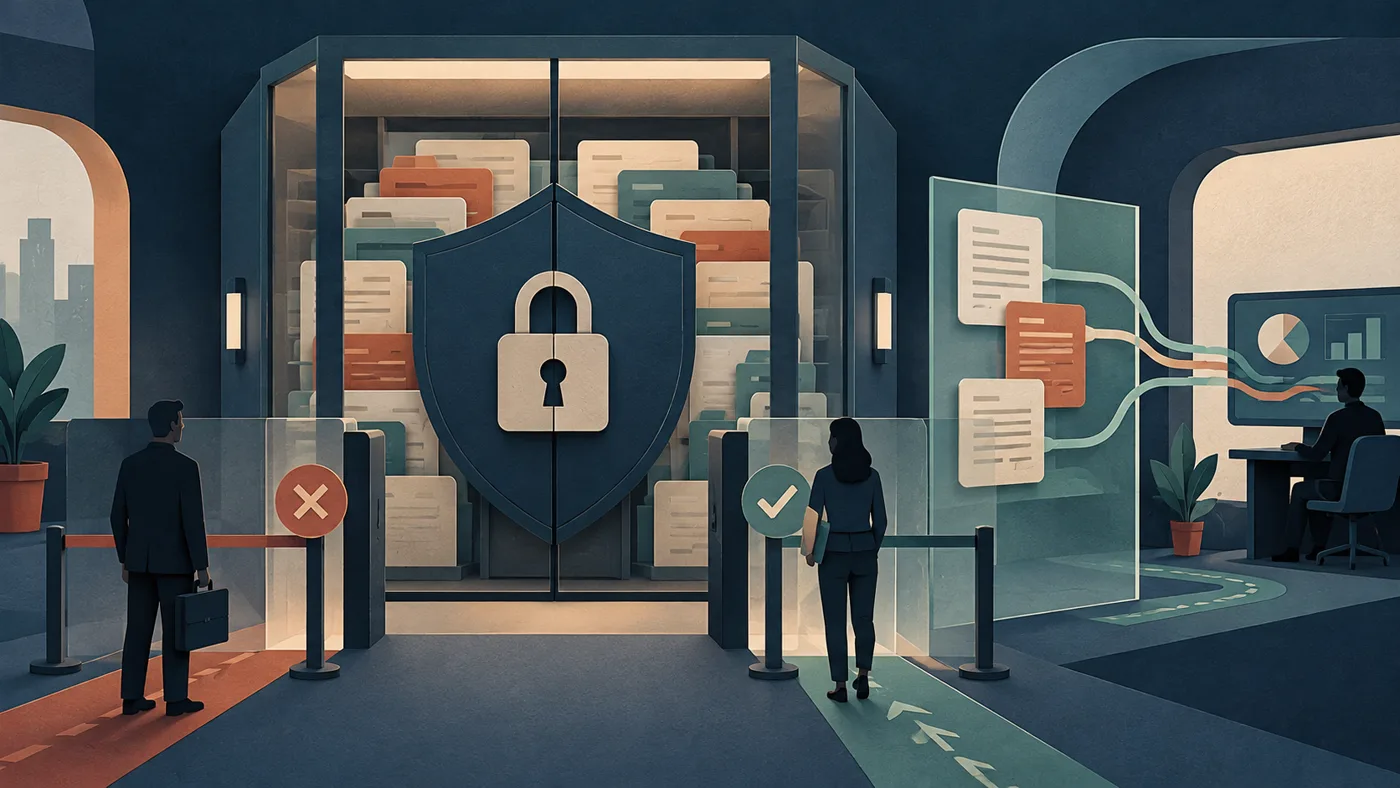
Keep company data private when using AI by mapping data flows, limiting access, checking retention and training terms, and minimizing what each workflow sends.
Test an AI knowledge base with role-based questions, source checks, conflict cases, permission tests, abstention criteria, and repeatable evaluation records.

Measure AI knowledge-management ROI with a baseline, realized time savings, error and rework signals, adoption quality, operating cost, and a clear decision threshold.
Decide whether to build or buy AI knowledge management by comparing permissions, workflow fit, evaluation, support, migration, and operating cost.
Capture employee knowledge by recording decisions, exceptions, relationships, ownership, and live work instead of a last-minute document dump.
Get employees to use an AI knowledge base by improving answer reliability, fitting it into real workflows, assigning feedback ownership, and measuring useful outcomes.
A practical update process for franchise knowledge bases: separate local guidance from brand standards, route changes to owners, and test that teams can find the current answer.
Use this business assurance testing checklist to verify sources, permissions, freshness, answers, actions, recovery, and evidence before releasing an AI knowledge system.
Understand a Business Brain as maintained company knowledge: sources, owners, permissions, updates, decisions, and evidence working together for a defined workflow.
Extend a knowledge-based mainframe renewal with a practical preservation plan for business rules, batch dependencies, expert judgment, controls, and acceptance evidence.
Design continuous knowledge-base updates with source events, scheduled backstops, idempotent processing, permission refresh, review gates, and observable failure states.
Keep enterprise knowledge search updated with new data by combining change detection, incremental indexing, permissions, source versions, and freshness checks.